White Papers keep your business in your prospects’ minds

More and more insurance industry organizations turn to White Papers to spread their message.

What is a white paper? A white paper is usually a “thought leadership” paper of about five-to-12 pages that highlights one or more of the benefits of your business. Insurance organizations use white papers to educate the public by delineating a problem or a challenge then posing a solution, usually highlighting your services.

Here are some of the key elements of a white paper:

  • Cover page
  • Executive summary
  • Description of the problem or issue the paper addresses
  • A solution to the problem
  • An action step (how readers can take action utilizing your product to solve their dilemma)
  • Charts and graphs, if needed
  • Footnotes, if needed
  • A conclusion
  • Information about your company

Once written, organizations distribute their papers either electronically to sites your potential clients visit, to sites that warehouse business data, or to their customer list. They are also great to hand out at a trade show booth or a local networking event.

One of the best uses of a White Paper is to announce its publication with a press release distributed through Business Wire or some other news service agency. A White Paper may simply serve as a reminder to clients who haven’t used your services in a long while or to those who’ve considered you in the past. It’s one way of saying, “We’re still eager to work with you.”

White papers generate short-term “buzz” and create a long-lasting testimonial that builds your brand.

Insurance white papers abound. Some insurance-related white papers we’ve written include “Computer Modeling Tames Super-Cat Hurricane Risk,” “Growing Wildland Urban Interface Increases Wildfire Risk,” and “Supply Chain Risk: Hidden Exposures for Your Company.

To non-insurance readers, these topics sound pretty dull. Okay, to insurance geeks, they still sound kind of dull. That’s why, if you’re considering a white paper to promote your business or technology, finding a writer with knowledge of the insurance industry and enthusiasm for the project is imperative. I can help.

Feel free to contact me at via my website at www.insurancewriter.com for more information or call me (602) 870-3230.

Lose those adverbs and strengthen your writing

Part of our ability to promote and persuade in the insurance industry hinges on our ability to write clearly, concisely and unemotionally. By eliminating adverbs from our writing, we can reduce the clutter in our communications.

What is an adverb and why should anyone care? An adverb is a part of speech that modifies several parts of the language, including verbs and adjectives. Often, adverbs end in “ly.”

Adverbs often answer questions like “when,” “how often,” “how,” or “in what manner.” Here are some adverbs:

· admittedly
· sadly
· totally
· highly
· completely

Adverbs weaken your writing. Most adverbs can be eliminated from text without losing one iota of meaning.

We see adverbs often in insurance writing. Have you ever written any of these sentences?

“The home was totally destroyed.” If it was destroyed, why do you need to add “totally”?

“Admittedly, you made a valid point.” If you say the point was valid, why add “admittedly”?

“I note that you were understandably confused.” Not only is the tone condescending, but it’s clearer to say, “I understand your confusion.”

We can avoid the use of adverbs in writing by using verbs. Instead of saying, “I was badly mistaken,” how about saying, “I was wrong”? Or instead of writing, “That is highly unlikely,” try “That is improbable.”

Search “ly” with your ‘find’ function and you can search and delete those adverbs. Your writing will be clearer and more concise.

Even the best writer needs occasional help to deliver the best message in the fewest words. A copywriter streamline your communications and set you apart from your competitors.

How to get published in a professional journal

Most magazines have editorial calendars with monthly publication themes. A great way to get your message across to your public is to advertise in a trade journal. Before you pay to advertise, however, how would you like to receive several pages of free advertising? If you write a professional article for one of your favorite journals, you can.

If you’ve never written an article for publication, this may seem difficult. Here’s a secret: It’s easier than you think. Most professionals have one or two areas where they consider themselves “experts.” Why not share your expertise with an audience that can benefit and perhaps refer business to you based on your expertise?

Because of my background in public sector risk management, I often write for Public Risk, the magazine of the Public Risk Managers Association. It dovetails perfectly with my experience and allows me to keep my name in the public sector spotlight since public sector risk managers subscribe to this magazine. Best of all, it’s free advertising. Articles build my credibility just as a published article can build yours.

You don’t have to be a great writer to write an article. If you have a good idea, a ghostwriter can work with you and develop an article geared to your favorite publication, as well as write the query letter for you. All you have to do is devote an hour or two of time and a good ghostwriter can make you a expert in your field.

Becoming successful means building your brand by keeping your name and your knowledge in the spotlight. A ghostwriter can help. I’d be happy to talk to you regarding your article idea.

P.S. No one needs to know that you didn’t write every word. What happens in Arizona stays in Arizona

Four tips to giving a great insurance speech

dumbpoodleAs insurance professionals, we must often deliver speeches in meetings or to large gatherings. It is never easy to find the time to prepare adequately for the talk. Even once prepared, many of us dread public speaking. These four tips will help you painlessly prepare your presentation.

  1. What is the theme of my talk? Always begin and end with a clear theme. If you are discussing premium increases at a Rotary Club, for example, your theme may be this: Premiums are increasing worldwide. The only way to control your premiums is through a more structured, loss-sensitive insurance program or through tighter risk management controls. Punch that theme repeatedly in your talk.
  2. Know your audience. If you are addressing your colleagues, your tone will be much different than when addressing CEOs of competing businesses, for example. Just because you feel comfortable with your audience, do not let your guard down too far. Remember that every word you utter could later appear on social media or in some blogger’s post, either in or out of context.
  3. What steps can the audience perform when they leave your talk that can help them implement action to your theme? Maybe they can meet with their current broker or hire a risk management consultant. Perhaps business owners should explore higher deductibles or other premium cost-saving measures. Anyone can regurgitate statistics and dry, “Rates are expected to increase six percent in the commercial property sector in 2015.” Provide action steps for your audience as a takeaway from your talk and watch their interest grow.
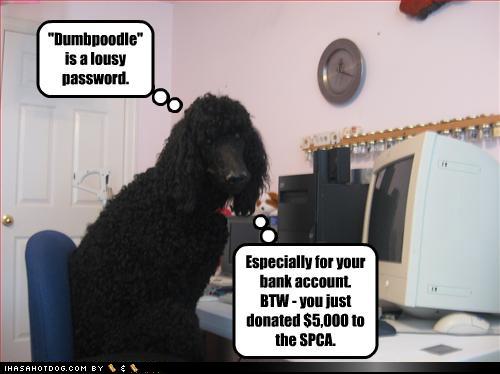
  4. How do you want your audience to feel after your talk? Open your talk with some humor and close with a laugh, as well. If you’re just not funny, find a funny meme like Dumbpoodle or make one yourself. Never let your audience walk away feeling gloomy. Audiences rarely remember content — they remember how you made them feel.

By taking these four steps each time you prepare a speech or even informal talks to your staff members, you will find preparation easier and your talk much more effective.

Tops tips to bulletproof your workers’ compensation program

workers compensation
Is your workers’ compensation program for the birds?

Last week I presented on ways employers can improve their workers’ compensation program at the Arizona Small Business Association’s annual meeting. Here are the key takeaways for Arizona businesses who have workers’ compensation insurance.

Don’t treat employees as subcontractors. Many businesses, especially in the trades like plumbing or roofing, make this costly error. This is a priority fix both for your employment tax obligations and for covering your employees under workers’ compensation. In Arizona, all you need is one full- or part-time employee (as defined by the IRS or an administrative law judge) to need workers’ compensation insurance.

Tighten injury reporting protocols. Rapid report to your carrier makes a huge difference in workers’ compensation costs. Back injuries are 35% more expensive if not reported within the first week, for example.

Do you have the best agent for your business needs? Does the brokerage or agency offer tools like Modmaster to help you reevaluate your experience modification factor and pinpoint what each injury costs? If not, maybe it’s time to find a new agent.

How’s your safety culture? Safety begins at the top. Employees can’t push safety uphill. Beginning each meeting with a safety report and forming a safety committee of line employees will make a big difference in your organization’s culture.

Where do you need safety training? Can your agent or insurer provide training resources? Spending a little money for training will save you lots of money (and administrative costs)  in the long run.

Do you need stronger hiring practices? Spend money pre-hire by using thorough pre-employment physicals, background checks and testing to eliminate undesirable candidates before you hire them.

Do you know who your adjusters are? Ask your carrier for an introduction if you haven’t met them. Skype or phone conferences quarterly can help, or better yet, on-site visits to discuss each loss, will help reduce costs.

Hone in on those claims where employees don’t get better. Work with your carrier to manage these long-term claims. Ask your adjuster to specifically outline their plan of action on the claim.

Do you have a return-to-work program? If not, you run the risk of an employment claim and increase the cost of each of your claims. Never tell an employee, “We can’t take you back until you’re 100%.”

Make your workplace a healthier one! Comorbidities like obesity, diabetes and hypertension drive medical and workers’ compensation costs. There are many vendors that can bring resources to your workplace to help manage health, including your health insurance carrier.

If I can help you improve your workers’ compensation program, call me for a no-obligation consultation today at 602.870.3230.

Improve your insurance technical writing by removing passive voice

meetingWhat is passive voice and why should you avoid it in your insurance writing? No matter what you’re writing for the insurance industry, a blog, a technical report or a white paper designed for marketing your business, passive voice weakens your writing. Once you understand a little about passive voice, it becomes much easier to find and eliminate it in your own writing.

What is passive voice?

Passive voice sentence construction occurs when the subject of a sentence becomes the object of an action. I know, it’s a grammar thing, something we disliked in school. Here’s an example of passive voice.

Our underwriting team was defeated by the western region.

Passive sentence construction weakens your writer because, in a nutshell, no one takes responsibility for the action. Written actively, this sentence would read like this:

The western underwriting region defeated our sales team.

Ouch! That wording smarts a bit more, doesn’t it?

In passive voice, the subject of the sentence is acted upon.

The applicant was rejected by Tom due to his negative loss history.

In active voice, the subject of the sentence (Tom the underwriter) performs the action.

Tom rejected the applicant due to his recent negative loss history.

One easy way to fix this and many passive sentences is to put the actor, Tom, ahead of the verb, “rejected” in the sentence.

Tips to find passive voice

To find passive voice, look for verb forms like “to be,” like “is,” “are,” “were,” followed by what is known as a past particle, a verb typically ending in “ed.” To make things harder, not all forms of “to be” are passive, but it’s a good red flag.

Here are a few more examples.

The claims department’s closing ratio was reduced last month by a high number of flu-ridden adjusters.

Rewritten actively you might say something like this:

Absenteeism in the claims department from the flu reduced last month’s closing ratios.

Here’s another passive construction.

The marketing team’s attendance at RIMS was delayed by one day due to bad weather in Atlanta.

Rewritten actively, the sentence might read like this:

Due to bad weather in Atlanta, the marketing team arrived at RIMS one day late.

I know what you’re thinking: “This is too hard! It’s grammar! I have a solution for you, or rather Microsoft Office does. While grammar check in MS Word won’t catch every instance of passive voice, it does a darn good job.

Here’s the plan

First, ensure you turn on grammar check in Word. If you aren’t sure how, read this link. Just be sure when you click your Review tab on Word and you click the Spelling & Grammar tab, the box at the bottom marked “Check grammar” has a check mark in it. (Now, if I’d said “is clicked,” I would be using a passive construction and Word would not catch it.)

Next, run the Spelling & Grammar check on your entire document. If you are new at writing active voice (the opposite of passive voice and what we strive for), you will probably have a high percentage of passive voice in your document. You will find the percentage of passive voice instances on the final grammar check tab under Readability, Passive Sentences.

Finally, to narrow down the location of your passive writing, go paragraph by paragraph with Spelling and Grammar. Do this by highlighting one paragraph at a time. If necessary, highlight sentence by sentence. Find the offending sentence and reword it. As you move to active voice in all your documents, you’ll find your writing comes alive and your audience, whether or not they understand grammar mechanics, will appreciate your writing style much more.

I’m a technical person – Give me a number

What percentage of writing should be passive? Professional writers argue percentages, but I strive for no passive writing in my work. If you’re new to this concept, shoot for five percent passive, and then aim even lower as you learn.

But we write about insurance,” you may argue. “It’s technical and somewhat boring!” Experts argue that even highly technical writing should avoid the use of passive voice. Even though we’re writing about insurance, we should never bore our readers. Our writing should be clear, crisp, concise and active. This writing style engages the reader and helps to ensure he or she will tag along to the end of your writing, whether it’s a claim report, an underwriting manual or a insurance white paper designed to educate clients or consumers.

In conclusion

One of the problems of passive voice is that we may attempt to distance ourselves from our decisions with the use of passive voice. I recommend you step up and say it like it is – take responsibility by using active voice. After all, that’s what we do in the insurance industry – we make decisions.

Active voice bolsters your writing, helping to engage your reader every step of the sometimes technical way. With the help of Microsoft and a few simple tips, you can actively improve your writing.